Scoliosis Muscle Imbalance Exercises: A Practical Guide
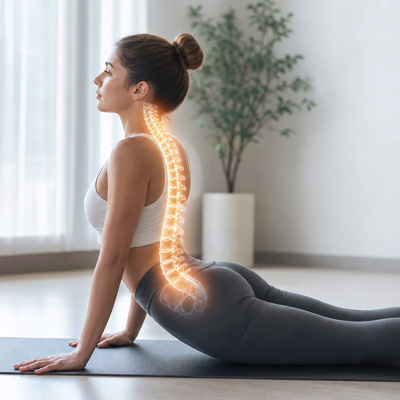
Scoliosis can affect more than the shape of your spine. As the spine curves and rotates, muscles on each side may work differently, leaving some areas tight or tired and others with less strength or control.
Scoliosis muscle imbalance exercises can support mobility, core strength, and movement control. At Haven Chiropractic Posture & Scoliosis, we consider your curve, posture, and movement pattern when determining which exercises may be appropriate.
Why does scoliosis cause muscle imbalance?
A scoliosis curve is three dimensional. The spine bends sideways and rotates at the same time, so the ribs follow it round.
That leaves the two sides of your torso doing different jobs. On the inside of the curve, the concave side, muscles sit short and compressed and the ribs crowd together. On the outside, the convex side, muscles sit long and work harder to hold you upright.
Over months this shows up in the mirror as uneven hips or one shoulder sitting higher, one waist creased deeper than the other, and one side of the back that aches by evening.
Here is the part worth holding on to. The muscle imbalance is mostly a consequence of the bony curve, not its cause. That single fact decides what exercise can realistically do.
Can scoliosis muscle imbalance exercises help?
Yes. Exercise can help people with scoliosis improve strength, flexibility, balance, and control of the trunk.
Scoliosis muscle imbalance exercises may help you:
- Build stronger trunk muscles
- Improve body awareness
- Move with better control
- Maintain or improve mobility
- Reduce muscle fatigue
- Make daily activities easier
The right exercises depend on your individual curve, movement patterns, and symptoms. This is why scoliosis exercises should not always follow a simple rule such as “stretch the tight side and strengthen the weak side.”
The three principles behind scoliosis specific exercises
Physiotherapeutic scoliosis specific exercises share three standard features recognized in the SOSORT approach.
- Three dimensional self correction. Lengthening through the spine, easing the rotation, and breathing into the collapsed side rather than simply sitting up straight.
- Training daily activities. How you sit, carry a bag, and sleep does far more hours of work than any exercise session.
- Stabilising the corrected posture, so the improvement holds without you thinking about it.
4 scoliosis muscle imbalance exercises to try
These exercises support mobility, flexibility, and trunk control. Move slowly within a comfortable range, and stop if you feel sharp or worsening pain.
1. Cat cow stretch
Helps with: Spinal mobility and tension through the back, neck, and shoulders.
- Start on your hands and knees, with your hands under your shoulders and knees under your hips.
- Slowly round your back upward and let your head follow the movement.
- Gently reverse the movement, opening your chest as your back moves into a comfortable arch.
- Move slowly between both positions without forcing your range of motion.
The cat cow stretch moves the spine through flexion and extension. It can encourage gentle movement when your back feels stiff after sitting or standing.
2. Side plank
Helps with: Side core strength and trunk stability.
- Lie on your side with your elbow directly beneath your shoulder.
- Lift your hips while keeping your torso in a controlled line.
- Keep your pelvis steady and avoid rolling forward or backward.
- Start with a short hold. For an easier version, keep your knees bent and resting on the floor.
Side planks work the muscles on one side of the trunk at a time. However, this does not mean everyone with scoliosis should train one side more. The appropriate side and amount may depend on your curve and muscle function.
3. Bird dog
Helps with: Core stability, coordination, and spinal control.
- Start on your hands and knees with your back in a comfortable neutral position.
- Slowly extend one arm forward and the opposite leg behind you.
- Keep your trunk and pelvis steady without twisting.
- Return to the starting position with control, then switch sides.
- For an easier version, lift only one arm or one leg at a time.
Bird dogs train your trunk to stay stable while your arms and legs move, supporting better control during everyday movement.
4. Latissimus dorsi stretch
Helps with: Tightness along the side of the torso and around the rib area.
- Stand or sit upright.
- Raise one arm overhead.
- Slowly lean toward the opposite side until you feel a gentle stretch along your torso.
- Stay within a comfortable range and avoid twisting or forcing the stretch.
People with scoliosis may notice more tightness on one side of the torso or ribs. However, the tighter side does not always need more stretching. Your curve location and rotation can affect which areas need attention.
What should you avoid when exercising with scoliosis?
Having scoliosis does not mean avoiding exercise, but it is important to pay attention to how your body responds. In general:
- Do not repeatedly push through movements that increase pain.
- Avoid forcing deep twisting or side bending into an uncomfortable range.
- Increase resistance gradually rather than making sudden jumps in weight.
- Be careful with one sided exercises when you do not understand your curve pattern.
- Stop when an exercise causes new numbness, tingling, weakness, or pain traveling into an arm or leg.
Muscle effort and mild stretching sensations are different from sharp or worsening pain. Exercise should challenge your muscles without making neurological or persistent pain symptoms worse.
When exercise is not the whole plan
Curve size changes the conversation. Under about 25 degrees, exercise and monitoring often carry the plan. Between roughly 25 and 40 degrees in a still growing teenager, scoliosis bracing is usually the standard, with exercise alongside it rather than instead of it. Larger curves need a surgical opinion in the mix.
Growth is the other variable, which is why scoliosis can change with age and why a teenager needs closer monitoring than an adult.
Come back for a review if the curve measures larger on repeat imaging, if one shoulder blade becomes more prominent, if pain is climbing rather than settling, or if you notice any change in your breathing.
A more balanced approach to scoliosis exercise
Scoliosis muscle imbalance exercises are most useful when the goal is better movement, strength, mobility, and control. Trying to make both sides of the body look perfectly symmetrical is not always realistic or necessary.
At Haven Chiropractic Posture & Scoliosis, Dr. Alaina Gelineau, D.C. evaluates spinal alignment and posture before determining what type of care may be appropriate. Depending on the individual, care may include Chiropractic BioPhysics, posture focused rehabilitation, and scoliosis specific strategies.
A clearer understanding of your curve can make it easier to choose exercises that fit your body instead of guessing which side needs more work. Schedule your appointment for a personalized evaluation and scoliosis care plan.
Frequently asked questions
Can exercises fix muscle imbalance caused by scoliosis?
Exercises can improve strength, flexibility, and movement control. They do not necessarily straighten the structural spinal curve.
Should I strengthen the weak side of scoliosis?
Not automatically. The side that looks or feels weaker may not be the only area that needs strengthening. Your curve and movement pattern should guide exercise selection.
Should I do side planks on both sides with scoliosis?
It depends on your curve and strength. General training may involve both sides, while targeted one sided training should be based on your individual scoliosis pattern.
How often should I do scoliosis exercises?
Gentle mobility exercises may be practiced regularly when comfortable. Strengthening exercises usually need recovery time, and frequency should match your ability, symptoms, and exercise plan.
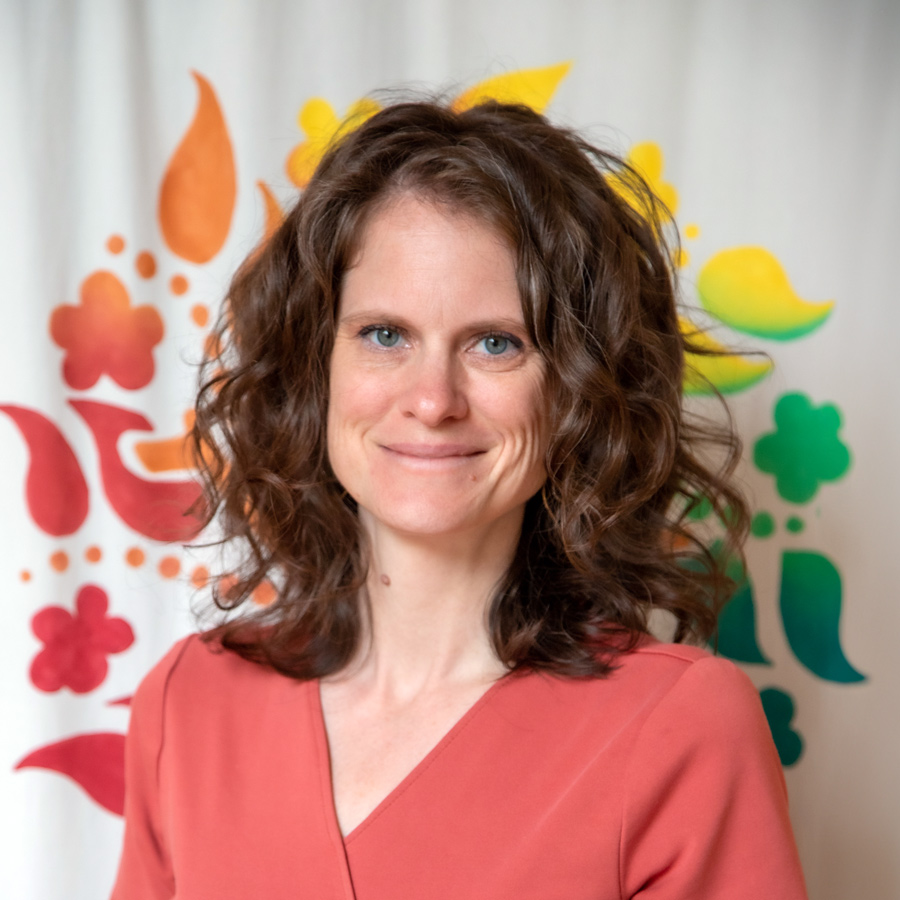
Dr. Alaina Gelineau has 12 years of experience in chiropractic care. She is a specialized chiropractor, certified in Chiropractic BioPhysics, focusing on posture correction and scoliosis care in Asheville, North Carolina.