Why Posture Matters More Than Pain?
 If you’re dealing with back pain, neck pain, headaches, or stiffness that keeps coming back, you’re not alone. Many adults start a new year hoping to finally “fix” the discomfort that’s been holding them back—only to find that short-term relief doesn’t always last.
Pain matters. It’s real. And it deserves to be taken seriously. But pain is rarely the root problem.
At Haven Chiropractic Posture & Scoliosis in Asheville, we help patients understand something most healthcare conversations skip over:
Pain is a signal.
Posture explains the problem.
Correction creates lasting change.
This article lays the foundation for long-term spinal health by explaining why posture—and not just symptoms—determines how your body functions over time.
Pain Is a Signal, Not the Problem
Pain is your body’s alarm system. It tells you that something isn’t working the way it should.
But alarms don’t explain why the issue started—or why it keeps returning.
Many people try to manage pain by stretching more, changing pillows, resting, or seeking treatments that temporarily calm symptoms. While these approaches can feel helpful in the short term, they often miss the underlying mechanical stress that caused the pain in the first place.
When symptoms keep recurring, it’s usually a sign that the structure of the spine isn’t supporting normal function.
Why Posture Matters More Than Most People Realize
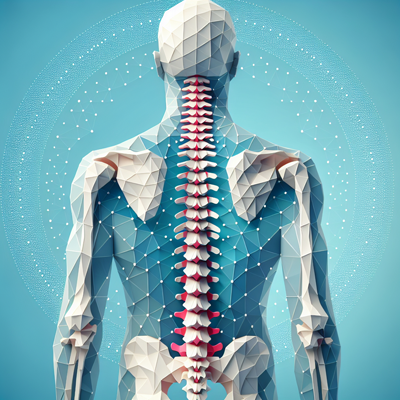
Posture isn’t about standing up straight or having “good habits.” It’s about the shape and alignment of your spine—especially when viewed from the side.
A healthy spine has natural curves called sagittal curves, including:
- A gentle forward curve in the neck (cervical lordosis)
- A slight backward curve in the mid-back (thoracic kyphosis)
- A forward curve in the low back (lumbar lordosis)
These curves aren’t cosmetic. They are shock absorbers that help your spine:
- Distribute load evenly
- Protect discs and joints
- Support the nervous system
- Move efficiently with less strain
When these curves flatten, reverse, or shift forward—often due to prolonged sitting, device use, stress, or old injuries—the spine is forced to work against gravity instead of with it.
That’s when problems begin.
Structure Determines Function (and Degenerative Stress)
One of the core principles of Chiropractic BioPhysics® (CBP®)—the evidence-based approach used at Haven—is simple and powerful:
Structure determines function—and it also determines where stress accumulates.
When posture changes, load distribution changes.
For example:
- A forward head posture increases the weight load on the cervical spine
- Flattened spinal curves concentrate pressure on discs and joints
- Muscles must work overtime to stabilize an inefficient structure
Over time, this abnormal mechanical stress can accelerate disc degeneration, joint irritation, muscle fatigue, and nerve irritation—long before severe pain appears.
This is why posture doesn’t just affect pain. It affects energy, mobility, balance, and resilience as you age.
How Posture Affects the Nervous System
Your spine doesn’t just support your body—it protects your nervous system.
The brain and spinal cord rely on proper spinal alignment to transmit signals efficiently. When posture collapses:
- Nerve pathways experience increased mechanical tension
- Muscles stay in a constant state of compensation
- Movement patterns become inefficient
- Fatigue increases even with simple activities
Many patients are surprised to learn that posture-related stress can contribute to headaches, brain fog, poor sleep, and reduced exercise tolerance—not just localized pain.
Research Insight: Cervical Alignment and Blood Flow
Research in the Chiropractic BioPhysics® (CBP®) literature has shown that cervical spinal alignment doesn’t just influence pain—it can also affect blood flow to and from the brain. Studies by researchers such as Alpayci, Moustafa, Harrison, Oakley, and Haavik have demonstrated that restoring cervical lordosis is associated with measurable improvements in vertebral and cerebral blood flow.
In practical terms, this means that when the neck’s natural curve is structurally restored, the pathways responsible for delivering oxygen and nutrients to the brain may function more efficiently. This helps explain why posture correction is often associated not only with reduced neck pain and headaches, but also improvements in symptoms like dizziness, fatigue, and mental fog.
Importantly, these changes were observed alongside objective alignment improvements—not just short-term symptom relief—reinforcing the principle that structural correction can influence neurological function over time.
Why Symptom-Based Care Often Falls Short
It’s important to acknowledge that many treatments can reduce pain in the short term.
But without addressing spinal alignment:
- Symptoms often return
- Episodes become more frequent
- The threshold for flare-ups lowers over time
This is the difference between palliative care and corrective care.
Symptom-based care focuses on calming discomfort.
Corrective care focuses on restoring alignment so the body can function with less stress.
At Haven, we don’t chase pain—we look for why the spine is under abnormal load in the first place.
What Is Corrective Chiropractic Care?
Corrective care is a structured, measurable approach to improving spinal alignment over time. Rather than guessing, we use:
- Detailed posture analysis
- Digital imaging to measure spinal curves
- Individualized plans based on biomechanics
- Reassessment to track objective change
CBP® research has shown that restoring spinal curves—particularly cervical and lumbar lordosis—is associated with improvements in pain, function, and disability scores, along with measurable structural change.
That distinction matters.
Short-term relief can happen without structural improvement.
Long-term stability requires alignment change.
Why This Matters in Daily Life
Posture affects how you experience everyday activities, including:
- Sitting at a desk or driving
- Walking and exercising
- Lifting children or groceries
- Sleeping and recovering
- Aging with strength and balance
When structure improves, the body doesn’t have to fight gravity all day. That means less wear, less compensation, and greater long-term resilience.
This is why posture-based care isn’t just for people in pain—it’s for people who want to stay active, capable, and independent over time.
3 Postural Metrics Every Adult Should Track
As we move into the new year, awareness is the first step toward change. In our January newsletter, we highlight three key posture-related metrics every adult should understand:
- Head Position – How far the head sits forward relative to the shoulders
- Spinal Curves – Whether cervical and lumbar curves are present or flattened
- Postural Balance – How weight and load are distributed through the spine
These metrics help explain why symptoms develop—and what needs to change for lasting improvement.
The Bottom Line
Pain gets your attention—but posture explains the pattern.
If you’ve tried to manage symptoms without lasting success, it may be time to look deeper at spinal structure and alignment.
At Haven Chiropractic Posture & Scoliosis, we specialize in corrective, CBP-based care that focuses on:
- Restoring spinal alignment
- Reducing abnormal mechanical stress
- Improving neuromechanical function
- Supporting long-term outcomes—not quick fixes
Ready to Learn What Your Posture Is Telling You?
If you’re curious how your spinal alignment may be affecting your health, we invite you to schedule a comprehensive posture evaluation.
Understanding your structure is the first step toward lasting change.
Strong Posture. Optimal Function. Lasting Wellness.

Dr. Alaina Gelineau has 12 years of experience in chiropractic care. She is a specialized chiropractor, certified in Chiropractic BioPhysics, focusing on posture correction and scoliosis care in Asheville, North Carolina.