Why Low Back Pain Keeps Coming Back: The Missing Role of Lumbar Lordosis
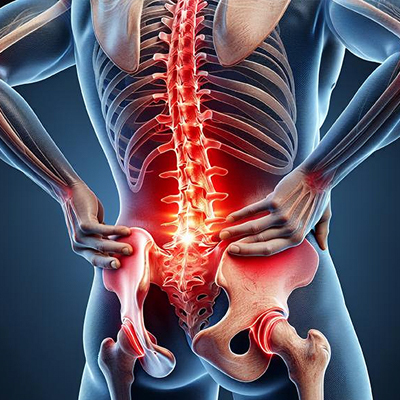 Low back pain is one of the most common reasons people seek chiropractic care—and one of the most frustrating.
You stretch. You strengthen your core. You rest for a few days. Maybe you feel better for a while… only to have the pain return weeks or months later.
If your low back pain doesn’t stay gone, you’re not doing something wrong. You may simply be missing the most important piece of the puzzle: your spinal structure.
Low back pain isn’t just about tight muscles or weak abs. In many cases, it’s a structural problem—one rooted in how your spine is shaped and how it manages daily load.
Why Does Low Back Pain Keep Returning?
Low back pain often improves temporarily with rest, massage, stretching, or exercise. But when symptoms keep returning, it’s usually because the underlying spinal mechanics haven’t changed.
Your lumbar spine (low back) is designed to have a gentle inward curve called lumbar lordosis. This curve plays a critical role in:
- Absorbing shock
- Distributing load evenly
- Stabilizing the spine during movement
When that curve flattens or collapses, the spine becomes less stable—and far more vulnerable to recurring strain.
Flat Low Back vs. Healthy Lumbar Curve
A healthy lumbar curve:
- Distributes weight evenly through the spine
- Reduces pressure on discs and joints
- Improves stability during sitting, standing, and lifting
- Allows muscles to work efficiently instead of constantly bracing
A flattened or reduced lumbar curve:
- Concentrates stress into discs and ligaments
- Increases joint compression
- Forces muscles to overwork for stability
- Raises the likelihood of recurring flare-ups
Many people with chronic low back pain are unknowingly living with loss of lumbar lordosis, often due to prolonged sitting, postural habits, prior injuries, or long-term compensation patterns.
Disc Loading, Instability, and Pain Recurrence
Spinal discs are designed to tolerate load best when the spine’s curves are intact. When lumbar lordosis is reduced:
- Disc pressure increases, especially during sitting and bending
- Load shifts unevenly across the disc
- Micro-instability develops over time
- The spine becomes reactive to everyday stress
This explains why someone can feel “fine” for a while—until a long drive, workout, or stressful week triggers another episode of pain.
The structure never changed.
The stress simply exceeded the spine’s tolerance.
Why Core Strength Alone Isn’t Enough
Strengthening your core is important—but strength cannot compensate for poor alignment. If the lumbar spine lacks its natural curve:
- Core muscles must work overtime just to stabilize posture
- Fatigue sets in faster
- Movement becomes less efficient
- Pain returns despite consistent exercise
Think of it like reinforcing the walls of a leaning building without correcting the foundation.
Strength supports stability.
Alignment creates it.
When Stretching Can Actually Make Things Worse
Stretching is often recommended for low back pain—but in cases of spinal instability, it can be incomplete or even counterproductive.
If the lumbar spine is already flattened:
- Aggressive stretching can further reduce passive stability
- Ligaments may become overstressed
- Muscles that should support the spine lose necessary tension
This doesn’t mean stretching is bad—it means stretching without understanding spinal structure can miss the real problem.
A Supporting Factor: Asymmetrical Loading from the Pelvis and Below
In some cases, even when lumbar lordosis is addressed, stability can be harder to maintain if forces entering the spine are uneven. This is most commonly seen with:
- Anatomical Leg Length Inequality (ALLI)
- Sacral base asymmetry
Even small, true differences in leg length can tilt the pelvis and sacral base, subtly altering how forces move through the lumbar spine and both lower kinetic chains with every step.
Over time, this can:
- Increase one-sided disc and joint loading
- Irritate the SI joint on the same side repeatedly
- Reinforce recurring pain patterns in the low back
This is why some people say:
“It’s always the same side.”
These asymmetries don’t replace the importance of lumbar lordosis—but they can influence how well lumbar correction holds if they’re not accounted for.
Corrective Care: Restoring Structure for Lasting Stability
At Haven Chiropractic, we don’t chase flare-ups—we look for the reason the spine keeps becoming unstable.
Using Chiropractic BioPhysics® (CBP®) principles, corrective care focuses on:
- Restoring lumbar lordosis
- Improving sagittal alignment
- Reducing abnormal disc and joint loading
- Addressing contributing asymmetries when present
- Tracking measurable structural change over time
Many treatments can reduce pain temporarily.
Structural correction is what reduces recurrence.
Why This Matters in Daily Life
A flattened lumbar curve doesn’t just affect your back.
It can influence:
- How long you can sit or stand comfortably
- Tolerance for walking, lifting, or exercise
- Fatigue and stiffness throughout the day
- Confidence in movement
When spinal structure improves, the body becomes more resilient to everyday stress.
Ready to Find the Missing Piece? If you’ve tried stretching, strengthening, and resting—but your low back pain keeps coming back—it may be time to look deeper.

Dr. Alaina Gelineau has 12 years of experience in chiropractic care. She is a specialized chiropractor, certified in Chiropractic BioPhysics, focusing on posture correction and scoliosis care in Asheville, North Carolina.