Tingling in Arms or Legs: Causes, Warning Signs, and When to See a Doctor

Tingling in arms or legs is one of those symptoms people tend to brush off – until it keeps coming back. Sometimes it’s completely harmless. Other times, it’s the nervous system quietly asking for attention.
This guide helps you understand the most common causes, recognize the warning signs that matter, and know when it’s time to get evaluated.
What Does Tingling in the Arms or Legs Mean?
At its core, tingling is a signal disruption – something is interfering with the way your nerves communicate. The sensation can range from mild to uncomfortable and may feel like:
- Classic pins and needles
- Partial numbness or reduced sensation
- A burning, crawling, or buzzing feeling
The cause could be as simple as compressed circulation from sitting in one position too long or something that deserves a closer clinical look. Location, frequency, and accompanying symptoms help distinguish between the two.
Common Causes of Tingling in Arms or Legs (From Mild to More Serious)
Temporary Pressure on a Nerve
Sleeping on your arm, crossing your legs for too long, or sitting in a cramped position can compress a nerve temporarily. The tingling resolves within minutes of changing position. This is benign – no cause for concern.
Poor Posture
Forward head posture, rounded shoulders, and prolonged desk sitting create sustained pressure on the cervical and lumbar spine. Over time, this irritates the nerve roots that branch into the arms and legs. Many patients are surprised to learn their pins and needles in arms or legs trace back to how they sit for eight hours a day.
Pinched Nerve (Nerve Compression)
A compressed nerve in the neck often produces tingling that travels down the arm — sometimes all the way to the fingers. Compression in the lower back tends to radiate into the hip, thigh, or foot. The location of tingling often maps directly to the spinal level involved.
Herniated Disc
When disc material pushes outward and contacts a nearby nerve root, the result is radiating pain, numbness, or tingling along that nerve’s pathway. This is one of the most common structural causes of tingling in arms and legs.
Repetitive Strain – Including Carpal Tunnel
Repetitive hand movements can compress the median nerve at the wrist, causing classic carpal tunnel symptoms: numbness, tingling, and weakness in the hand and fingers. This is a soft tissue issue – not a spinal one and is important to distinguish correctly.
Poor Circulation
Reduced blood flow to the extremities – from cardiovascular issues, peripheral artery disease, or even prolonged inactivity – can produce a cold, tingling, or numb sensation in the limbs.
Vitamin Deficiencies
B12 and B6 deficiencies are well-documented causes of tingling in arms and legs, particularly in adults over 50 and those with dietary restrictions. A simple blood panel can identify this.
Peripheral Neuropathy
Damage to the peripheral nerves – most commonly associated with diabetes – produces persistent tingling, burning, and numbness, typically starting in the feet and hands. This requires medical management, not just conservative care.
Other Medical Conditions
Certain infections, neurological conditions like multiple sclerosis, thyroid dysfunction, and some medications can all produce tingling as a symptom. This is why a thorough evaluation matters – not all tingling comes from the same source, and not all of it is appropriate for chiropractic care.
Can Poor Posture or Spine Problems Cause Tingling?
Yes and this is often underrecognized. The spine is the primary protection for your central nervous system. When spinal alignment is compromised, nerve roots exiting between vertebrae can become irritated or compressed.
Common patterns we see clinically:
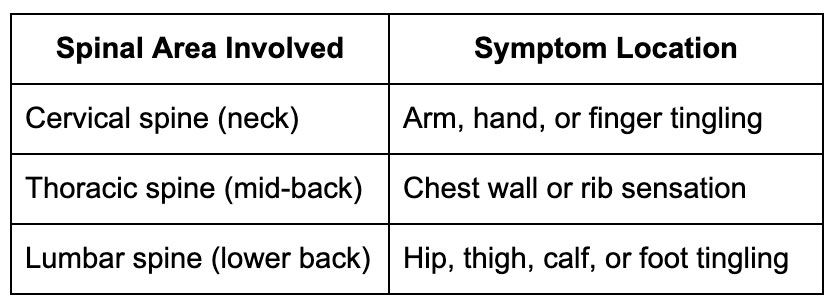
Posture-related tingling often changes with position – better when standing, worse after long sitting, or more noticeable in the morning. These patterns are meaningful and clinically useful.
How the Cause of Tingling Is Diagnosed
A proper evaluation looks at several layers:
- Health and symptom history – when it started, what makes it better or worse, and any associated symptoms
- Neurological screening – reflex testing, sensation checks, and strength assessment
- Posture and spinal evaluation – identifying structural contributors
- Imaging, if indicated – X-rays or MRI to assess disc, joint, or nerve involvement
Diagnosis comes before treatment. Treating tingling without understanding its source is how care misses the mark.
Treatment Depends on the Cause
Simple Lifestyle Changes
For posture-related or position-dependent tingling, adjusting how you sit, how often you move, and your workstation setup can produce meaningful improvement – sometimes quickly.
Medical Treatment
Tingling from diabetes, vitamin deficiency, infection, or systemic disease requires medical management. Chiropractic care is not the appropriate primary treatment for these causes.
Structural or Nerve-Related Issues
When tingling is driven by spinal misalignment, disc involvement, or nerve compression related to posture, a structural approach to care can address what medications alone don’t reach.
When Chiropractic Care May Help
Chiropractic care is most appropriate when tingling is linked to:
- Neck or back pain with radiating arm or leg symptoms
- Posture-related nerve irritation – particularly forward head posture and cervical compression
- Structural spinal issues identified through clinical evaluation
At HAVEN Chiropractic Posture & Scoliosis, Dr. Alaina Gelineau is the only corrective care Chiropractor in Asheville, NC certified in Chiropractic BioPhysics – a research-based approach that addresses the structural root cause of nerve-related symptoms, not just the surface presentation.
That said: not every case of tingling is spinal in origin, and not every case is appropriate for chiropractic care. An honest evaluation will tell you which category your symptoms fall into.
Simple Things You Can Do Right Now
While you’re deciding on next steps, these habits reduce posture-driven nerve irritation:
- Change positions every 30–45 minutes – set a timer if needed
- Raise your screen to eye level – forward head posture adds significant cervical load
- Note when symptoms appear – sitting, lying down, after exercise, at night?
- Avoid sleeping on the arm that tingles – gravity and pressure matter overnight
Pattern awareness is the first step toward understanding what’s driving your symptoms.
Don’t Dismiss What Your Nerves Are Telling You
Tingling in arms or legs causes range from something as simple as sitting too long to something as significant as nerve compression or a systemic condition. The symptom itself isn’t the full story – what matters is understanding where it’s coming from.
If your tingling is persistent, worsening, or tied to neck or back discomfort, it may be time to get a structural evaluation and find out what’s actually behind it.
Schedule your consultation with Dr. Alaina Gelineau – and get a clear, honest answer about what your nervous system is asking for.
Frequently Asked Questions
Why do my arms tingle at night?
Nighttime tingling often comes from sustained arm or wrist compression during sleep – particularly from sleeping with arms overhead or bent under the body. Cervical spine involvement can also worsen when supported posture is removed during sleep.
Is tingling always a nerve problem?
Not always. Circulation, vitamin deficiencies, and systemic conditions can also produce tingling. This is why evaluation matters – the cause determines the appropriate response.
Can poor posture cause numbness?
Yes. Sustained forward head posture increases compressive load on cervical nerve roots, which can produce numbness and tingling in the arms and hands – even without any visible injury.
Is tingling serious?
It depends. Brief, position-related tingling is usually benign. Persistent, worsening, or unexplained tingling in arms or legs – especially with other symptoms – warrants professional evaluation
This article is educational and does not replace a clinical diagnosis or personalized medical advice.

Dr. Alaina Gelineau has 12 years of experience in chiropractic care. She is a specialized chiropractor, certified in Chiropractic BioPhysics, focusing on posture correction and scoliosis care in Asheville, North Carolina.