Lower Back Pain When Sitting: Why It Happens and What To Do

Lower back pain when sitting may show up during a workday, long drive, or even after a short time in a chair. You might feel an ache, pressure, or stiffness that improves once you stand or start moving.
The cause is not always the chair itself. How long you sit, your position, muscle fatigue, and certain back problems can all play a role.
At HAVEN Chiropractic Posture & Scoliosis in Asheville, NC, we look at posture, spinal alignment, and movement to understand what may be contributing to recurring discomfort.
Why does my lower back hurt when sitting?
Several factors can make your lower back uncomfortable while sitting. Three common ones involve posture, the lumbar discs, and the muscles around your hips.
Slouching and sitting posture
Slouching rolls the pelvis backward and flattens the natural curve of the lower back. Staying in this position for long periods may increase strain and make your back feel stiff or sore.
Increased stress on the lumbar discs
Sitting, especially in a slouched position, changes how pressure is distributed through the lower back. This may aggravate symptoms in people with disc related problems, including a bulging or herniated disc.
Tight hips and reduced glute activity
Long periods of sitting keep your hips bent and reduce movement around the hips and buttocks. This can contribute to stiffness and muscle fatigue, making it harder for these muscles to support comfortable movement when you stand or walk.
What your symptoms may tell you
The way your pain behaves can offer clues about what may be contributing to it.
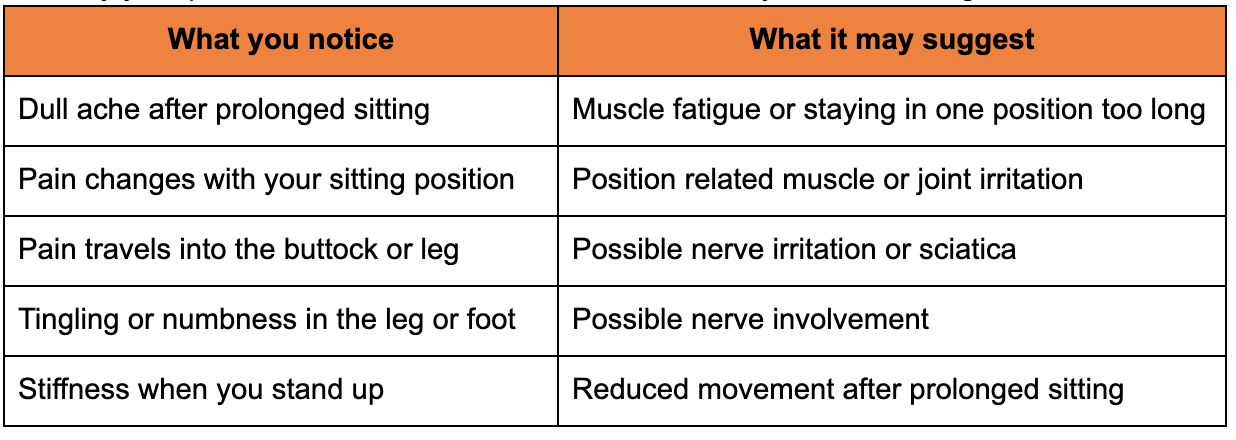
These patterns cannot diagnose the cause on their own. Persistent or worsening symptoms may need a professional evaluation.
5 ways to relieve lower back pain from sitting
A few simple changes can make sitting more comfortable and reduce strain on your lower back.
1. Set up an ergonomic sitting position
Keep both feet flat on the floor, with your knees level with or slightly lower than your hips. Position your screen around eye level so you do not have to lean forward or look down for long periods. If pain regularly develops while working at a desk, a functional assessment can help identify how posture, movement, and your workstation setup may be contributing.
2. Use lumbar support
Place a small lumbar cushion or rolled towel in the natural curve of your lower back. This can provide extra support and help you avoid collapsing into a slouched position.
3. Try the 45-to-5 rule
After about 45 minutes of sitting, stand up and move for around 5 minutes. A short walk or gentle stretch can help break up long periods of sitting and reduce stiffness.
4. Add simple stretches
Try a few slow repetitions of cat cow or a gentle standing back extension. Keep the movements comfortable and stop if they increase pain or cause symptoms to travel down your leg.
5. Stay hydrated
Spinal discs contain a large amount of water, so normal hydration is important for overall disc health and function. Drink enough fluids throughout the day, especially if you spend long hours sitting or working indoors.
When lower back pain from sitting needs an evaluation
Consider getting evaluated when:
- Pain keeps returning or is getting worse.
- You can sit for less time before pain starts.
- Symptoms interfere with work, sleep, or daily activities.
- Pain travels into your buttock or leg.
- You experience recurring numbness, tingling, or weakness.
- Changes to your sitting habits are not helping.
Seek prompt medical attention for new loss of bowel or bladder control, numbness around the groin or saddle area, or significant or rapidly worsening weakness.
How HAVEN evaluates recurring lower back pain
When lower back pain continues despite changes to your sitting habits, an evaluation can help identify what may be contributing to it.
At HAVEN, we may look at:
- Your symptoms and health history.
- Posture and spinal alignment.
- Movement and functional patterns.
- Digital X-rays when clinically appropriate.
Depending on the findings, conservative care may include corrective chiropractic care, posture focused care, or spinal rehabilitation.
The goal is not to assume that every case comes from poor posture. It is to understand your individual pattern and determine what approach may be appropriate.
Frequently asked questions
Why does my lower back hurt only when I sit?
Sitting keeps your hips and lower back in a relatively fixed position. Muscle fatigue, your sitting position, or an existing disc or nerve problem may make symptoms more noticeable while seated.
Is sitting or standing better for lower back pain?
Neither is always better. Alternating between comfortable sitting, standing, and movement may be more helpful than staying in one position for long periods.
Can sitting too long cause lower back pain?
Prolonged sitting may contribute to stiffness and discomfort, especially when you rarely change positions. Regular movement breaks may help.
Can a herniated disc cause pain when sitting?
Yes. A herniated disc may cause lower back pain and, when a nerve is irritated, pain, tingling, or numbness that travels into the leg.
Finding relief from lower back pain when sitting
Small changes to your workstation, regular movement, and more variety in your sitting positions may help reduce discomfort.
When pain keeps returning, however, it may be time to look beyond your chair. HAVEN Chiropractic Posture & Scoliosis evaluates posture, spinal alignment, and movement to better understand recurring back problems.
If lower back pain continues to interfere with sitting or daily activities, contact us to schedule an evaluation.

Dr. Alaina Gelineau has 12 years of experience in chiropractic care. She is a specialized chiropractor, certified in Chiropractic BioPhysics, focusing on posture correction and scoliosis care in Asheville, North Carolina.