Forward Head Posture: Signs, Causes and Treatment Options
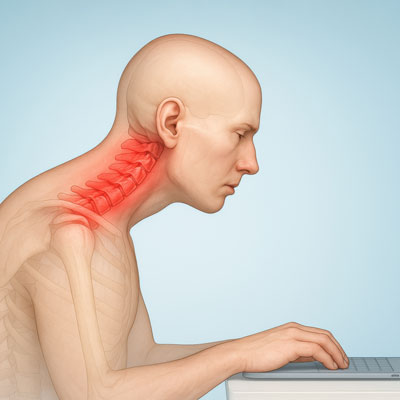
Forward head posture occurs when your head sits in front of your shoulders instead of aligning with your spine. It is common among people who spend long hours using computers, looking at phones, or sitting at desks.
This posture may contribute to neck stiffness, shoulder tension, and headaches, although not everyone experiences symptoms. Understanding its causes and treatment options can help you improve your posture and manage discomfort.
What is forward head posture?
Forward head posture (FHP) is a condition in which the head extends forward beyond its natural position over the shoulders.
When viewed from the side, the ears should generally align with the shoulders. With forward head posture, the ears sit farther forward, often accompanied by rounded shoulders.
This position changes how the neck muscles support the head and may increase muscle strain over time.
Forward head posture is also associated with tech neck, a term describing neck discomfort linked to prolonged phone or computer use.
Common signs and symptoms of forward head posture
Forward head posture can affect both your appearance and neck comfort.
Common signs include:
- Head positioned forward: Your ears sit noticeably in front of your shoulders.
- Rounded shoulders: Your shoulders roll forward, sometimes with an increased upper back curve.
- Protruding chin: Your chin extends forward, especially when using screens.
- Neck stiffness: Turning or tilting your head feels uncomfortable.
- Shoulder tension: Muscles around your neck and shoulders feel tight.
- Upper back discomfort: You experience soreness between your shoulder blades.
- Headaches: Neck muscle tension may accompany certain headaches.
These symptoms can have other causes, so posture alone cannot confirm a diagnosis.
How to check for forward head posture at home
You can use a side profile photo to check your head position:
- Stand naturally with your shoulders relaxed.
- Ask someone to take a photo from the side.
- Check whether your ears sit noticeably in front of your shoulders.
- Look for rounded shoulders or a forward chin position.
This simple check helps identify possible postural changes but does not replace a professional assessment.
What causes forward head posture?
Forward head posture often develops from prolonged positioning, muscle imbalances, and everyday habits.
Prolonged screen time and poor posture habits
Looking down at a phone or leaning toward a computer screen for long periods encourages the head to move forward.
Common habits include:
- Using a monitor positioned too low.
- Holding a phone below eye level.
- Leaning forward while working.
- Sitting without regular movement breaks.
Muscle weakness and imbalances
Weakness or reduced endurance in the neck and upper back muscles may make it harder to maintain comfortable head positioning.
Tight chest muscles and limited upper back mobility may also contribute to rounded shoulders and forward head positioning.
Other contributing lifestyle factors
Limited physical activity, poorly adjusted workstations, and prolonged sitting may reinforce forward head posture.
Individual anatomy, age, and existing spinal conditions can also influence head and neck alignment.
How can you improve forward head posture at home?
Exercises and daily habit changes may help improve head positioning, neck mobility, and muscle endurance.
Exercises for forward head posture
- Chin tucks
Chin tucks help strengthen the muscles that control head positioning.
- Sit upright and look straight ahead.
- Gently draw your chin backward without tilting your head.
- Hold for 3–5 seconds, then relax.
- Repeat 5–10 times.
- Chest stretches
Chest stretches help reduce tightness around the front of your shoulders.
- Stand in a doorway with your forearms against the frame.
- Step forward until you feel a gentle chest stretch.
- Hold for 15–30 seconds.
- Shoulder blade squeezes
This exercise supports upper back muscle strength and control.
- Sit or stand with relaxed shoulders.
- Gently squeeze your shoulder blades together.
- Hold for 5 seconds.
- Repeat 8–10 times.
Stop any exercise that causes sharp pain, dizziness, or worsening symptoms.
Ergonomic adjustments and daily habits
Small changes to your workspace and routine can help reduce prolonged neck strain.
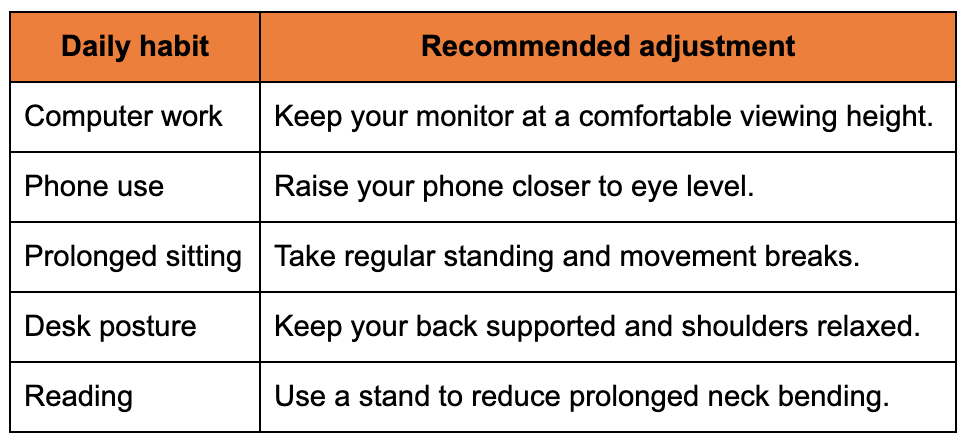
Changing positions regularly is more practical than trying to maintain perfect posture throughout the day.
Professional treatment options for forward head posture
Professional care may help when forward head posture is accompanied by persistent neck pain, stiffness, or reduced mobility.
A clinician may assess your spinal alignment, neck movement, muscle strength, and symptoms before recommending treatment.
Physical therapy and rehabilitation
Physical therapy focuses on improving neck mobility, muscle strength, and movement patterns.
Treatment may include strengthening exercises, stretching, postural training, and guidance on daily activities.
Exercise programs may improve head positioning and reduce neck discomfort in some patients, although results vary.
Chiropractic care and postural correction
Chiropractic care may help manage neck discomfort and movement restrictions associated with forward head posture.
At Haven Chiropractic Posture & Scoliosis, we assess spinal alignment, mobility, and individual symptoms to develop appropriate care plans.
Depending on your needs, treatment may include chiropractic adjustments, corrective exercises, and rehabilitation strategies. Chiropractic BioPhysics (CBP) techniques may also be considered when clinically appropriate.
Treatment focuses on improving comfort and function, although results depend on individual circumstances.
Improving forward head posture with the right care
Improving forward head posture often involves regular exercise, better daily habits, and professional care when needed. Understanding the factors affecting your posture can help you choose the right approach.
At Haven Chiropractic Posture & Scoliosis in Asheville, NC, Dr. Alaina Gelineau, a Doctor of Chiropractic and certified Chiropractic BioPhysics (CBP) practitioner with over 12 years of experience, specializes in posture correction and spinal rehabilitation.
If forward head posture or neck discomfort is affecting your daily activities, you can schedule a consultation to have your condition evaluated and explore appropriate treatment options.
Frequently asked questions about forward head posture
Can forward head posture be corrected?
Yes, forward head posture can often improve through strengthening exercises, stretching, and better daily habits. Results depend on individual factors and underlying conditions.
How long does it take to improve forward head posture?
Some people notice improvements within several weeks, while others need longer. Progress depends on the severity, treatment approach, and consistency of exercises.
Can forward head posture cause headaches?
Forward head posture may contribute to neck tension associated with certain headaches, but it is not always the cause.
When should you see a professional for forward head posture?
Seek professional evaluation if you experience persistent neck pain, frequent headaches, or limited neck movement. Progressive weakness or numbness requires prompt medical attention.

Dr. Alaina Gelineau has 12 years of experience in chiropractic care. She is a specialized chiropractor, certified in Chiropractic BioPhysics, focusing on posture correction and scoliosis care in Asheville, North Carolina.