Can Poor Posture Cause Fatigue?

You slept 8 hours. You drank your coffee. Yet by 3 PM, you’re exhausted. Sound familiar?
The culprit might not be your sleep. It might be how you sit, stand, and move all day. If you’re hunched over a desk or scrolling on your phone constantly, your body is working overtime and it’s draining your energy reserves. Have you ever considered whether poor posture could cause fatigue? The answer will be in the article you are about to read below.
The Quick Answer
Can poor posture cause fatigue? – Yes. Poor posture directly contributes to fatigue by:
- Increasing muscle workload and constant tension
- Reducing breathing efficiency (less oxygen = less energy)
- Stressing your nervous system
But here’s the catch: Fatigue is usually multifactorial. Poor posture is typically one piece of a larger puzzle that includes sleep, stress, nutrition, and lifestyle.
What Types of Fatigue Are We Talking About?
- Physical fatigue: Low energy, heavy limbs, muscle exhaustion
- Mental fatigue: Brain fog, poor focus, low motivation
- Chronic fatigue: Persistent exhaustion that doesn’t improve with rest
Posture-related fatigue usually combines all three – your muscles are tired, your brain isn’t getting enough oxygen, and your nervous system is in overdrive.
What Counts as Poor Posture?
It’s not just “bad habits”. It’s a structural imbalance that changes how your spine handles load.
Common patterns we see:
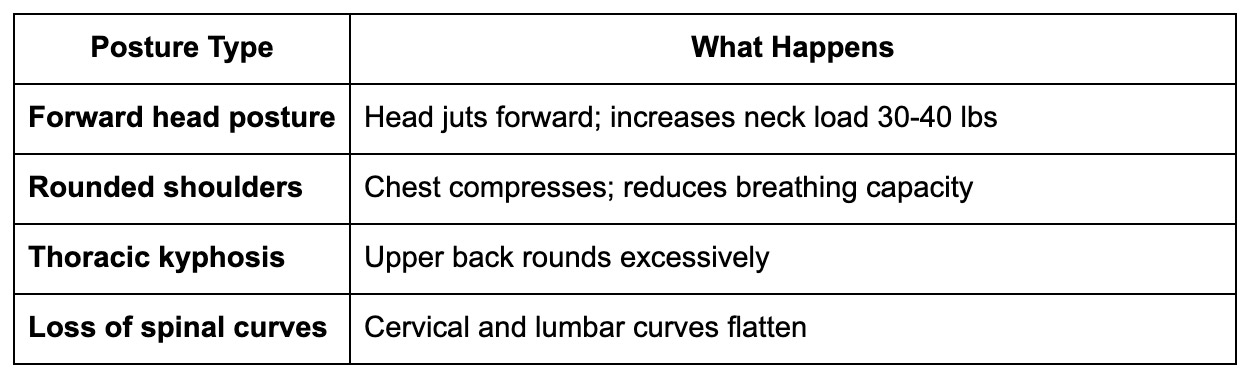
When these patterns become chronic, they’re not cosmetic – they fundamentally change the mechanical stress throughout your entire spine and nervous system.
See more: The Long-Term Effects of Poor Posture: What Happens to Your Body After 10 Years?
5 Ways Poor Posture Drains Your Energy
1. Muscle Overload
Your neck, shoulders, and upper back work constantly in poor posture. Unlike dynamic movement (contract → relax), slouching locks muscles in endless tension. This consumes energy rapidly.
Result: Muscular exhaustion by day’s end.
2. Increased Spinal Load
Your head weighs 10-12 pounds. In good posture, your neck handles this efficiently.
But for every inch your head moves forward:
- Load on your cervical spine increases by 30-40+ pounds
- That’s like carrying an extra child around all day with just your neck
Result: Extra energy required just to sit upright.
3. Reduced Breathing
Slouching compresses your thoracic cavity. Your diaphragm can’t expand fully.
This means:
- Shallower breaths (you don’t notice)
- Less oxygen entering your bloodstream
- Less cellular energy production
- Brain fog (your brain is oxygen-starved)
Result: You’re literally not breathing enough to power your body.
4. Nervous System Stress
Spinal misalignment creates mechanical stress on your spine, which can influence your autonomic nervous system balance.
This shifts you toward “fight or flight” mode, which:
- Increases cortisol and adrenaline
- Keeps your system in constant low-level activation
- Exhausts your nervous system over time
Result: You feel drained even when you haven’t done anything physically demanding.
5. Poor Circulation
Tight muscles compress blood vessels. Rounded shoulders and forward head posture kink the arteries supplying your brain and upper body.
Less blood flow = less oxygen + fewer nutrients reaching your muscles and brain.
Result: Double hit to your energy production.
Red Flags: Symptoms That Point to Posture-Related Fatigue
If you recognize most of these, posture is likely part of your problem:
- Brain fog (especially 3-5 PM)
- Neck/shoulder stiffness at day’s end
- Headaches after screen time
- Feeling drained after sitting all day
- Shallow breathing when seated
- Low motivation by afternoon
- Heavy feeling in your upper body
Quick Self-Test (60 Seconds)
Do these sound like you?
✓ Tired after long sitting, fine after movement
✓ Neck/upper back tight by day’s end
✓ Catch yourself slouching constantly
✓ Headaches after desk or phone use
✓ Deep breathing feels restricted when sitting
If 3+ apply: Your posture is likely contributing to fatigue.
Why Rest Alone Doesn’t Fix This
Sleep repairs tired muscles, but it doesn’t fix structural misalignment.
Here’s the cycle:
- You sleep 8 hours ✓
- You wake up and resume the same poor posture ✗
- Same muscles fatigue again
- Same spinal stress returns
- You need more rest
Without addressing the structure, fatigue becomes chronic.
That’s why people say: “I sleep enough but still feel exhausted.” It’s not a sleep problem. It’s a structural problem.
Rule These Out First
Not all fatigue is posture-related. See your doctor if you have:
- Sleep disorders (sleep apnea, insomnia)
- Thyroid or hormonal issues
- Vitamin deficiencies (B12, iron, vitamin D)
- Chronic stress or anxiety
- Autoimmune or systemic conditions
Posture is a contributing factor, not the whole story in every case.
Stretching Helps, But It’s Not Enough
What stretching and exercise do:
- Provide temporary muscle relief
- Improve overall fitness
What they don’t do:
- Fix spinal alignment
- Correct the structural problem
- Prevent compensation patterns from returning
It’s like fixing a leaky roof with buckets. The buckets help, but until you fix the roof, the leak comes back.
How Corrective Chiropractic Care Works
Adjustment ≠ Correction
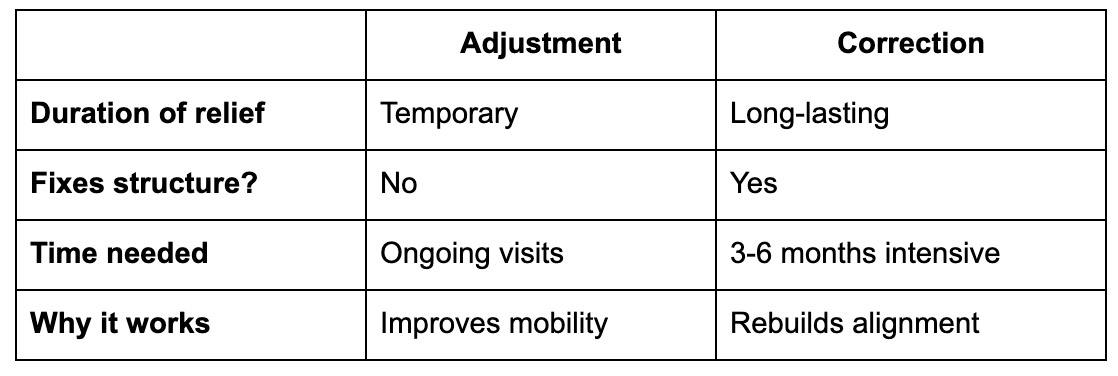
What Correction Actually Fixes
✓ Restores cervical and thoracic curves
✓ Reduces spinal overload
✓ Rebuilds structural stability
✓ Prevents compensation patterns
Chiropractic BioPhysics (CBP) is the evidence-based model we use – it’s physics-based structural correction, not just temporary relief.
What Better Looks Like
People who’ve had their posture corrected report:
✓ Increased energy all day long
✓ Reduced neck/shoulder tension
✓ Deeper, easier breathing
✓ Better mental clarity and focus
✓ No more “3 PM crash”
✓ Fewer headaches
✓ Better sleep quality
Results take 3-6 months of consistent correction, but they’re sustainable because we fixed the root cause.
When to Get Evaluated
Seek a professional assessment if you have:
- Persistent fatigue + postural symptoms
- Chronic neck/upper back tightness
- Frequent headaches linked to screen time
- Fatigue not improving with sleep
- Visible postural changes
- Brain fog + low energy combo
Ready for More Energy?
Your poor posture might be silently draining your energy through multiple pathways: muscle overload, reduced breathing, nervous system stress, and poor circulation.
The good news? When you fix the structure, fatigue improves and it stays improved.
You don’t need endless coffee and willpower. You need your spine back in alignment.
HAVEN Chiropractic Posture & Scoliosis in Asheville, NC specializes in corrective care through Chiropractic BioPhysics (CBP).
We’ll evaluate:
- Your spinal alignment
- Your postural patterns
- Whether fatigue has a structural component
- A personalized correction plan
An appointment with Dr. Alaina Gelineau – the only CBP-certified corrective care chiropractor in Asheville – will provide the most accurate answers to your situation, and we will develop a long-term plan for your journey to regaining your energy. Contact us today!

Dr. Alaina Gelineau has 12 years of experience in chiropractic care. She is a specialized chiropractor, certified in Chiropractic BioPhysics, focusing on posture correction and scoliosis care in Asheville, North Carolina.