Can a Chiropractor Make Sciatica Worse?

Can a chiropractor make sciatica worse? The fear is understandable. Sciatica pain can be debilitating, and the thought of someone “cracking” your spine might seem risky when you’re already in agony. But here’s the truth: most sciatica worsens from not addressing the structural cause, not from getting proper chiropractic care.
In this guide, we’ll explain when chiropractic is safe for sciatica, when it should be modified, and why CBP® offers the safest, most effective approach for lasting nerve pain relief.
What Is Sciatica and Why Does It Happen?
Sciatica occurs when the sciatic nerve – the longest nerve in your body – becomes irritated or compressed. This nerve runs from your lower back through your hips and down each leg, so compression anywhere along this pathway causes radiating pain.
Common Causes of Sciatica
Understanding what triggers sciatic nerve compression explains why structural correction works so well:
- Herniated discs: Disc material bulges outward and presses on the nerve root
- Spinal misalignment: Vertebrae shift out of position, narrowing nerve exit spaces
- Spinal stenosis: The spinal canal narrows with age, squeezing nerve pathways
- Scoliosis: Abnormal spinal curvature creates uneven pressure on nerves
- Piriformis syndrome: The piriformis muscle in your hip spasms and traps the sciatic nerve
See more: Can a Chiropractor Help Sciatica?
Why Some People Fear Chiropractic Can Make Sciatica Worse
We hear these concerns constantly at HAVEN Chiropractic, and they deserve honest answers.
Common Concerns About Chiropractic for Sciatica
“Cracking will make my herniation worse” The “crack” is just gas bubbles releasing from the joint – it doesn’t affect disc material. Properly performed adjustments actually reduce disc pressure.
“My leg pain increased after adjustment” This can happen temporarily as inflammation shifts during realignment. However, increasing pain should always be evaluated.
“Aggressive twisting seems dangerous” High-velocity rotational adjustments aren’t appropriate for all sciatica cases. This is why technique selection matters.
“I had a bad experience elsewhere” Not all chiropractors use the same methods. Corrective care practitioners like those trained in CBP® use gentler, more precise approaches.
Does Chiropractic Ever Make Sciatica Worse?
Yes, but it’s rare and usually preventable. Chiropractic side effects for sciatica are more likely when:
- No X-rays or imaging before treatment
- Incorrect technique for your specific disc condition
- Ignoring chiropractic red flags like progressive weakness
- Severe disc herniation treated with aggressive adjustments
A study by Rubinstein et al. in Spine Journal found that adverse events from spinal manipulation occur in less than 1% of cases and most were minor, temporary soreness.
When Chiropractic Care Is Safe and Highly Effective for Sciatica
Can chiropractic help sciatica? Absolutely – when the right conditions are met and proper protocols are followed.
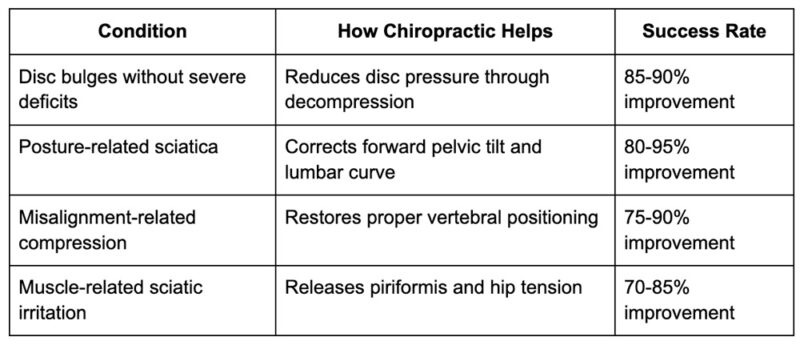
Conditions Chiropractic Helps Safely
Signs You’re a Good Candidate
Is chiropractic safe for sciatica in your case? Good indicators include:
- Pain improves when lying down or in certain positions
- No progressive muscle weakness or foot drop
- Pain follows predictable nerve patterns (buttock → thigh → calf)
- You can walk without severe limping
- Previous imaging shows disc bulge, not complete rupture
When Chiropractic Should Be Modified or Avoided
Responsible chiropractors know when traditional adjustments need modification or when medical intervention comes first.
Red Flags Requiring Medical Evaluation First
When chiropractic is not recommended without medical clearance:
- Progressive leg weakness that worsens daily
- Loss of bowel or bladder control (cauda equina syndrome – emergency!)
- Sudden severe trauma from accidents or falls
- Suspected tumor, infection, or fracture based on symptoms
These situations require immediate medical imaging (MRI) and potentially surgical consultation before any spinal manipulation.
When Traditional Adjustments Should Be Modified
For certain sciatica cases, we adjust our approach:
- Large disc herniation: Use gentle decompression instead of high-velocity adjustments
- Severe acute inflammation: Wait for inflammation to reduce before full adjustments
- Scoliosis-related compression: Requires specialized corrective protocols like CBP®
This is why proper evaluation and imaging are non-negotiable at HAVEN Chiropractic.
Why Chiropractic BioPhysics® (CBP®) Is a Safer, More Precise Method
Traditional chiropractic provides temporary relief by improving joint motion. CBP treatment for nerve compression corrects the underlying structural problems causing sciatica in the first place.
CBP® Benefits for Sciatica
As the only certified chiropractor Asheville offers with advanced CBP® training, Dr. Alaina Gelineau uses evidence-based structural correction that:
- Corrects underlying spine structure rather than just moving joints
- Restores lumbar curvature reducing chronic nerve pressure
- Uses digital X-rays, postural analysis, and 3D modeling for precision
Why CBP® Minimizes Risks
Chiropractic BioPhysics for sciatica is safer because:
- No blind adjustments: Every correction is calculated based on your X-ray measurements
- Gentle, calculated rehabilitation: Uses traction and mirror-image® positioning instead of forceful manipulation
- Long-term structural correction: Addresses the root cause so sciatica doesn’t keep returning
How a Good Chiropractor Diagnoses Sciatica Safely
Proper diagnosis prevents complications and ensures is chiropractic safe for sciatica in your specific case.
What an Accurate Evaluation Includes
Your first visit at HAVEN Chiropractic involves comprehensive testing:
Imaging analysis:
- Digital X-rays showing spinal alignment and disc spacing
- MRI review (if you have recent imaging) to assess disc herniation severity
Physical examination:
- Orthopedic tests (straight leg raise, slump test) reproducing sciatic pain patterns
- Neurological testing checking reflexes, sensation, and muscle strength
- Posture evaluation identifying structural imbalances
- Leg length and pelvic alignment testing
Why Proper Diagnosis Prevents Worsening
Thorough evaluation allows us to:
- Identify disc severity and determine if your herniation requires modified techniques
- Define safe vs. unsafe techniques for your specific condition
- Create the right corrective plan targeting your structural cause
Without this information, treatment becomes guesswork and that’s when problems occur.
Why Some People Feel Worse After Chiropractic
Understanding the difference between normal adaptation and concerning symptoms helps you know when to worry.
Normal Soreness After Adjustment
Expected for 24-48 hours:
- Mild muscle soreness similar to post-workout achiness
- Slight stiffness as muscles adapt to new spinal positioning
- Temporary fatigue as your body processes realignment
This discomfort is actually a positive sign – your body is responding and adapting to improved alignment.
Concerning Pain That Requires Follow-Up
Contact your chiropractor immediately if you experience:
- Sharp, increasing leg pain that’s worse than before treatment
- New numbness, tingling, or weakness
- Foot drop (difficulty lifting your foot)
- Pain that doesn’t improve after 48 hours
These symptoms indicate technique modification is needed or additional imaging is required.
What to Expect During Your First Visits
Treatment progression at HAVEN Chiropractic follows a careful, systematic approach:
Visit 1: Consultation & Imaging
- Comprehensive health history and symptom discussion
- Digital X-rays and structural analysis
- Review of any existing MRI or CT scans
Visit 2: Report of Findings
- Detailed explanation of your sciatica’s structural cause
- Customized treatment plan presentation
- Answer all your questions about safety and timeline
Visits 3-6: Gentle Trial Phase
- Conservative adjustments monitoring your response
- Spinal decompression therapy reducing disc pressure
- Mobility exercises improving nerve glide
Ongoing: Corrective Care Phase
- Gradual transition to structural correction protocols
- Mirror-image® adjustments and traction
- Home exercises reinforcing spinal improvements
Final Answer: Can a Chiropractor Make Sciatica Worse?
Here’s the bottom line: Can chiropractor help sciatica? Yes, and safely when performed by properly trained practitioners using appropriate techniques.
At HAVEN Chiropractic, we specialize in Chiropractic BioPhysics for sciatica – the gold standard for structural correction that prevents long-term flare-ups rather than just chasing temporary symptom relief.
Stop wondering if chiropractic can help your sciatica – schedule your comprehensive evaluation today. We’ll perform thorough diagnostics, explain exactly what’s causing your nerve pain, and create a safe, effective treatment plan customized to your specific condition.
Experience the difference that evidence-based, structural chiropractic care makes. Your sciatic nerve and your quality of life deserve expert attention.

Dr. Alaina Gelineau has 12 years of experience in chiropractic care. She is a specialized chiropractor, certified in Chiropractic BioPhysics, focusing on posture correction and scoliosis care in Asheville, North Carolina.