Can a Curved Spine Cause Hip Pain? Signs and Relief
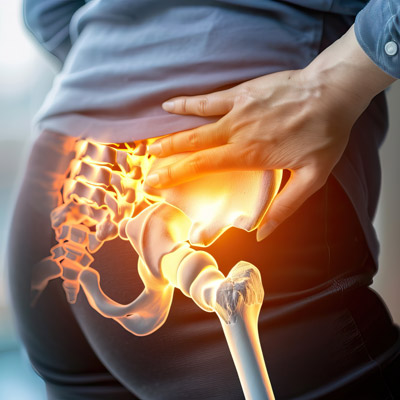
Can a curved spine cause hip pain? Yes, it can. A curve in the spine may shift your pelvis, put more weight on one side of your body, and make the muscles around your hips work harder. Over time, that extra load can turn into a sore, tired hip.
That said, hip pain does not always start in the spine. Trouble inside the hip joint, muscle strains, arthritis, and pinched nerves can all feel the same. Finding the true source matters before you start any treatment. Here is how a curved spine can affect your hips, what the pain feels like, and what may help.
How the spine and hips work together
Your spine, pelvis, and hips are connected and work together when you stand, walk, bend, or sit. The base of the spine rests on the pelvis, which links your upper body to your legs. When these areas are balanced, your weight is shared more evenly between both hips.
A curved or rotated spine can shift your upper body away from the center. To help you stay upright, the pelvis may tilt or rotate. This can make one hip sit higher or carry more weight than the other, leading to uneven hips, shoulders, or waistlines.
Why a curved spine may lead to hip pain
A few changes can connect a spinal curve to hip pain.
Uneven pressure on the hips
This is the clearest way a curved spine can cause hip pain. When your body leans to one side, your hips stop sharing weight equally. One hip carries more load while standing and walking, and its muscles work overtime to keep you steady. That repeated strain leads to soreness, tightness, and tired muscles.
A tilted or rotated pelvis
Scoliosis can leave one side of the pelvis higher, or turned forward or backward. A tilted pelvis changes the angle where your thigh bones meet the hip sockets, which affects how the hip moves and how much stress lands on nearby tissue.
Muscle imbalance
On a curved spine, the muscles on one side often get tight and overused, while the other side gets stretched and weak. That imbalance runs down into the lower back, buttocks, and hips, so simple things like climbing stairs can start to feel uncomfortable.
Changes in the way you walk
A spinal curve can change your stride and balance. Some people take shorter steps on one side, others shift their trunk with each step. Each change is small, but it adds up over thousands of steps a day, straining the hip, knee, or ankle.
Irritated joints or a pinched nerve
Pain that feels like the hip can actually start in the sacroiliac joints, where the spine and pelvis meet. In some adults, a curve comes with worn discs or arthritis that leaves less room around the nerves. A pinched nerve can then send pain from the lower back into the buttock, hip, or leg, sometimes with tingling or numbness.
What does hip pain from a curved spine feel like?
So can a curved spine cause hip pain you can actually feel? Yes, and the feeling depends on where the curve sits and which tissues are under stress. Pain tied to spinal or pelvic imbalance may feel like:
- A dull ache on one side of the hip
- Tightness in the buttock or outer hip
- Soreness after standing or walking
- Lower back pain that spreads toward the hip
- A pulling feeling through one side of the waist
- Burning or tingling that runs down the leg
Some people feel it mostly on the higher hip, others on the side that carries more weight. It often builds after long activity and eases with rest, a change of position, or gentle movement.
Signs your hips and spine may be uneven
Hip pain alone does not prove you have scoliosis, but a few visible changes can hint that your spine and pelvis are off balance.
- One hip sits higher than the other
- One side of the waist looks more curved
- One shoulder or shoulder blade is higher
- The body leans to one side, or clothing hangs unevenly
- One shoe wears down faster
- The ribs look higher on one side when bending forward
Other things that can cause hip pain
It is easy to blame a curved spine when scoliosis is already there, but something else may be behind the pain. Common culprits include hip arthritis, a strained muscle, bursitis, a hip labrum injury, sacroiliac joint irritation, a herniated disc, sciatica, or a leg length difference.
Where it hurts gives clues. Pain deep in the groin points more toward the hip joint, while pain in the buttock or lower back points more toward the spine or sacroiliac joint. These patterns are not exact, so a real exam is still needed to find the source.
How the cause is found
To answer whether a curved spine can cause your hip pain, a good evaluation looks well beyond the spot that hurts. Your provider may ask when the pain started and what makes it worse, then check your walking, posture, hip movement, muscle strength, and balance. Standing X-rays may be suggested when a structural curve is likely, since they show how the spine and pelvis line up while you carry weight. The goal is not just to spot a curve, but to learn whether it is tied to your pain.
How to relieve hip pain linked to a curved spine
Treatment depends on your age, symptoms, curve type, health, and how your body moves, so there is no single plan for everyone.
Adjust your daily habits
Small changes ease repeated strain. Try not to stand with most of your weight on one leg, change positions throughout the day, and take movement breaks when you sit for a long time. Supportive shoes can help if worn out ones leave you feeling unsteady.
Use exercises chosen for your body
The right movement builds strength and control around the spine and hips, often the core, buttocks, and posture muscles. But generic online routines are not always safe for scoliosis. A move that helps one curve pattern can hurt another, so your exercises should match your own posture.
Work on spinal and pelvic alignment
When the pain ties back to posture or spinal balance, care can go beyond quick symptom relief. A corrective plan may include gentle chiropractic adjustments, posture exercises, spinal traction, and home care, based on your exam and imaging. The aim is to improve how the spine and pelvis work together while easing stress on the sore hip.
Some symptoms need a doctor right away. Get prompt care if hip or back pain comes with new leg weakness, loss of bladder or bowel control, numbness around the groin, severe pain after a fall, fever or unexplained weight loss, pain that wakes you at night, or trouble standing or walking.
Can treating the spine ease the hip pain?
People often ask, can a curved spine cause hip pain that treatment will actually fix? It can ease when care lowers the stress from poor spinal and pelvic alignment. Still, results depend on the true cause. Fixing posture cannot repair every hip problem, and a damaged joint, fracture, or serious nerve issue may need different care. That is why a full exam matters.
Evaluation and treatment of hip pain caused by spinal curvature at Haven Chiropractic
At Haven Chiropractic Posture & Scoliosis in Asheville, Dr. Alaina Gelineau is a Doctor of Chiropractic who graduated from Life University and is certified in Chiropractic BioPhysics. She focuses on posture correction, spinal imbalance, and scoliosis care.
Through posture assessments and X-ray imaging when necessary, Dr. Gelineau evaluates whether spinal curvature or pelvic imbalance is contributing additional stress to the hips. A personalized care plan is then developed based on each individual’s specific findings.
Final thoughts
A curved spine can contribute to hip pain by altering pelvic alignment, distributing weight unevenly, or affecting muscles and nerves. However, issues in the hip joint, soft tissues, or lower back can also cause similar symptoms.
Therefore, identifying the true source of the pain is the most important step. A thorough evaluation will help create an appropriate care plan, reduce pressure on the hip, and support more comfortable movement in daily activities.
Frequently asked questions
Can a curved spine cause hip pain on just one side?
Yes, one sided hip pain is common, because a curve often loads one hip more than the other. The higher hip or the weight bearing side tends to feel it most.
Can Chiropractic BioPhysics help reduce hip pain?
It can, if hip pain is related to spinal curvature, poor posture, or pelvic imbalance. The care plan will be based on each individual’s assessment results.
Should I try exercises I found online?
Be careful, since a move that suits one curve can worsen another. Exercises for scoliosis should be matched to your specific posture by a provider.

Dr. Alaina Gelineau has 12 years of experience in chiropractic care. She is a specialized chiropractor, certified in Chiropractic BioPhysics, focusing on posture correction and scoliosis care in Asheville, North Carolina.