What Causes Scoliosis in Adults?
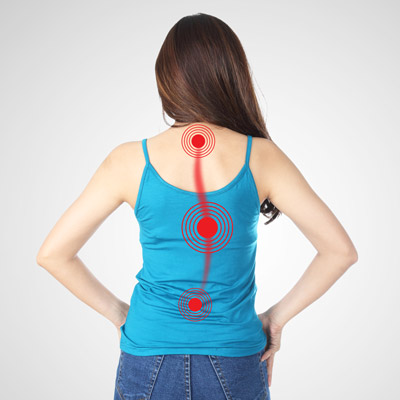
Understanding what causes scoliosis in adults helps you make informed decisions about treatment and gives you realistic expectations about managing your condition. Unlike childhood scoliosis, adult curves almost always have identifiable causes and knowing yours guides the most effective approach.
Understanding Adult Scoliosis: Two Main Categories
Adult-onset scoliosis (de novo): Curves that develop for the first time after skeletal maturity, typically from degenerative changes. You never had scoliosis as a child – it’s entirely new.
Adult progression of adolescent scoliosis: Curves that began during adolescence but continue worsening into adulthood. You may or may not have known about the curve as a teen.
Understanding which category you fall into matters because treatment strategies and expected outcomes differ significantly between newly developed curves and long-standing progressive curves.
Primary Causes of Scoliosis in Adults
1. Degenerative Scoliosis (De Novo Scoliosis)
The #1 cause: Age-related spinal degeneration accounts for the majority of adult scoliosis cases, especially in people over 50.
- Disc degeneration: Intervertebral discs lose water content and height with age. When one side of a disc degenerates faster than the other (asymmetric collapse), it tilts the vertebra, starting a lateral curve.
- Facet joint arthritis: The small joints connecting vertebrae develop arthritis unevenly, creating asymmetric motion patterns and gradual curvature.
- Cumulative effects: Years of uneven loading from poor posture, repetitive activities, or prior injuries accelerate asymmetric degeneration on one side of the spine.
2. Progressive Idiopathic Scoliosis
If you had mild scoliosis as a teen (maybe 15-20 degrees) that was “just monitored”, it may continue progressing into adulthood – especially if it exceeded certain thresholds.
Why curves progress in adulthood:
- Curves over 50 degrees at skeletal maturity almost always continue worsening
- Gravity’s constant downward force on asymmetric spines
- Degenerative changes accelerating existing curves
- Hormonal factors in women (menopause, osteoporosis)
Curves most likely to progress:
- Thoracic curves > 50 degrees
- Lumbar curves > 40 degrees
- Double curves with large compensatory components
3. Osteoporosis and Compression Fractures
Bone loss creates perfect conditions for developing scoliosis, particularly in postmenopausal women.
How osteoporosis causes curves:
- Vertebral compression fractures: Weakened bones fracture under normal loads, collapsing more on one side and creating wedge-shaped vertebrae that tilt the spine.
- Asymmetric bone density loss: Bones on one side of the spine sometimes weaken faster, creating uneven support.
- Progressive deformity: Multiple compression fractures compound, creating increasing curvature over time.
4. Neuromuscular Conditions
Neurological disorders affecting muscle strength and coordination can cause or worsen scoliosis in adults.
Common conditions include:
- Muscular dystrophy: Progressive muscle weakness creating uneven spinal support
- Cerebral palsy: Muscle spasticity and imbalance continuing into adulthood
- Parkinson’s disease: Postural changes and trunk rigidity promoting curves
- Multiple sclerosis: Muscle weakness and coordination problems affecting spinal alignment
Neuromuscular scoliosis progresses more rapidly than degenerative types and often requires different management strategies.
5. Trauma and Spinal Injuries
Significant trauma can initiate scoliotic changes that manifest years later.
How injuries contribute:
- Vertebral fractures: Healed fractures may leave residual deformity initiating curve development.
- Post-traumatic instability: Ligament damage from accidents creates abnormal motion patterns over time.
- Chronic compensation: Long-term protective guarding and altered movement after injury.
Car accidents, falls, and sports injuries sometimes plant seeds for scoliosis that doesn’t become apparent until degenerative changes amplify initial asymmetry.
6. Post-Surgical Scoliosis
Prior spine surgery paradoxically increases scoliosis risk through several mechanisms.
Surgery-related causes:
- Adjacent segment degeneration: Fused spinal levels transfer extra stress to neighboring segments, accelerating degeneration there and potentially creating curves.
- Failed back surgery syndrome: Scar tissue, instability, or hardware complications creating asymmetric loading.
- Iatrogenic factors: Surgical technique occasionally creates unintended imbalance or removes stabilizing structures.
7. Spinal Tumors and Lesions
Rare but serious: Tumors account for a small percentage of adult scoliosis but must be ruled out, especially with rapid curve development or unusual pain patterns.
How tumors cause curves:
- Primary spinal tumors: Growths originating in vertebrae, discs, or spinal cord creating structural asymmetry.
- Metastatic cancer: Cancer spreading to spine from elsewhere, weakening bones asymmetrically.
- Asymmetric degeneration: Tumors affecting one side more than the other.
Any adult developing rapid scoliosis progression with night pain, unexplained weight loss, or neurological symptoms requires immediate medical evaluation.
8. Congenital Abnormalities Manifesting in Adulthood
Some people have mild structural abnormalities present since birth that don’t cause curves until adulthood when combined with degenerative changes.
Examples include:
- Hemivertebrae (wedge-shaped vertebrae from incomplete development)
- Transitional vertebrae (extra or fused segments)
- Spina bifida occulta (minor spinal closure defects)
These congenital variations may remain asymptomatic for decades until age-related degeneration amplifies their structural impact.
9. Leg Length Discrepancy and Postural Factors
- Structural leg length discrepancy: One leg genuinely shorter from bone length differences, forcing spine to curve compensating for uneven pelvis.
- Functional discrepancy: Unilateral hip, knee, or ankle problems creating apparent leg length difference.
- Chronic postural habits: Decades of asymmetrical positioning (always carrying bags on one side, crossing same leg, leaning on one hip) potentially contributing to curve development.
- Occupational factors: Jobs requiring repetitive asymmetric loading or sustained twisted postures.
While bad posture alone rarely causes true structural scoliosis, chronic postural asymmetry combined with degenerative changes can contribute to curve development.
How Chiropractic BioPhysics® Addresses Causes of Scoliosis in Adults
Understanding causes of scoliosis in adults allows us to create targeted treatment addressing your specific situation.
CBP’s structural rehabilitation approach:
Unlike symptom-focused care treating only pain, Chiropractic BioPhysics® systematically corrects structural problems driving curve progression.
How CBP differs:
- Addresses biomechanical factors: Correcting asymmetric loading patterns contributing to degeneration
- Customized by cause: Degenerative curves need different protocols than progressive idiopathic curves
- Objective measurement: X-ray analysis tracking actual curve changes, not just symptom improvement
- Three-dimensional correction: Addressing lateral curve, rotation, and sagittal plane distortions
As the only CBP-certified chiropractor Asheville offers, I design treatment specifically for adult scoliosis causes – whether degenerative, progressive, osteoporotic, or post-traumatic.
Understand Your Cause, Guide Your Treatment
What causes scoliosis in adults? For most people, it’s degenerative changes creating asymmetric spinal collapse. For others, it’s progressive adolescent curves, osteoporosis, trauma, or other factors – each requiring specific management approaches.
At HAVEN Chiropractic Posture & Scoliosis, we don’t just treat scoliosis generically. We identify your specific causative factors through comprehensive evaluation including detailed X-ray analysis, then design CBP protocols addressing those root causes rather than just chasing symptoms.
Don’t let your scoliosis continue progressing unchecked. Schedule your comprehensive structural evaluation today. We’ll identify exactly what’s causing your curve, explain realistic treatment expectations, and create a personalized correction plan targeting your specific situation.
Frequently Asked Questions
Can you suddenly develop scoliosis as an adult?
Not truly “sudden” – but degenerative curves can become noticeable relatively quickly (over months to 1-2 years) once degeneration reaches critical thresholds. Why scoliosis worsens with age relates to accelerating degenerative changes.
What is the most common cause of scoliosis in adults?
Degenerative scoliosis from age-related disc and joint changes accounts for approximately 60% of adult cases, especially in people over 50.
Can bad posture cause scoliosis in adults?
Poor posture alone doesn’t cause structural scoliosis, but chronic asymmetric posture combined with degenerative changes may contribute to curve development or progression.
Can weight gain cause scoliosis in adults?
Weight gain doesn’t directly cause scoliosis but increases spinal loading, potentially accelerating degenerative changes that lead to curves.
Are women more likely to develop adult scoliosis?
Yes, particularly degenerative and osteoporotic types. Hormonal changes during menopause, lower bone density, and longer life expectancy all contribute.
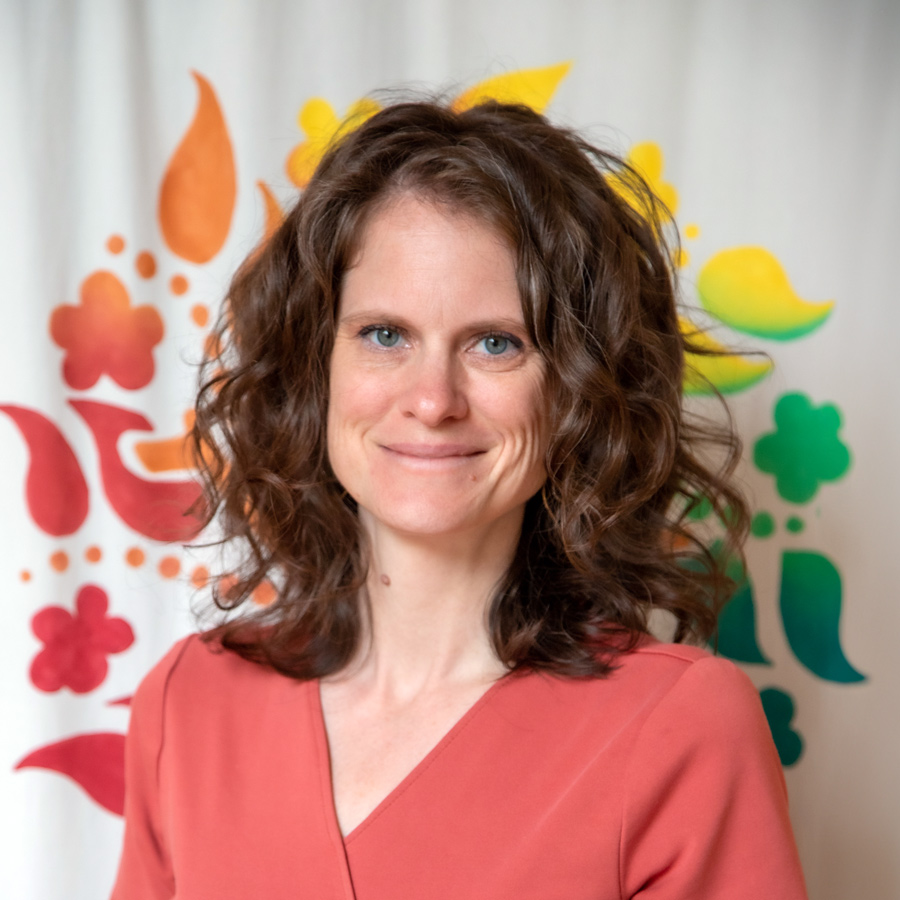
Dr. Alaina Gelineau has 12 years of experience in chiropractic care. She is a specialized chiropractor, certified in Chiropractic BioPhysics, focusing on posture correction and scoliosis care in Asheville, North Carolina.