7 Types of Bad Posture: Identification Guide & Correction Methods
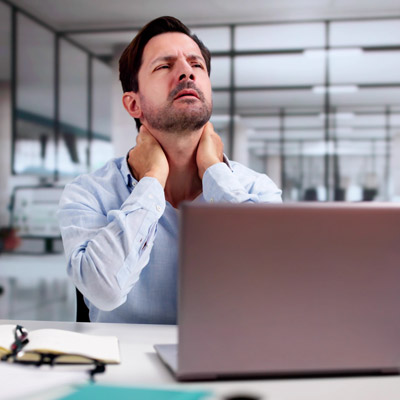
Understanding common types of bad posture helps you recognize problems early, when correction is easiest and most effective. Let’s break down the seven most prevalent posture patterns I see daily and what you can do about each one.
1. Forward Head Posture (Tech Neck)
Your head sits forward of your shoulders rather than stacked directly above them. For every inch forward, your head effectively weighs 10 extra pounds, creating massive strain on neck muscles and cervical vertebrae.
Stand sideways to a mirror. Your ear should align with your shoulder. If your ear is several inches forward, you have forward head posture – also called anterior head carriage or tech neck posture.
Common causes:
- Hours spent looking down at phones or tablets
- Computer monitors positioned too low
- Poor posture from sitting with slouched shoulders
- Chronic stress causing protective neck tension
- Sleeping with multiple pillows propping head forward
Correction approach:
Immediate changes:
- Raise screens to eye level
- Set hourly reminders to check head position
- Perform chin tucks (gently pull chin back, lengthening back of neck)
Professional correction: Forward head posture requires specific cervical traction and mirror-image adjustments restoring the natural neck curve. Research by Oakley et al. in Journal of Physical Therapy Science showed that Chiropractic BioPhysics® protocols significantly improved forward head posture measurements.
2. Kyphosis (Rounded Upper Back/Hunchback)
Excessive forward curvature of the upper back, creating a rounded or hunched appearance. This posture misalignment restricts breathing capacity and accelerates upper spine degeneration.
From the side, your upper back has a noticeable hump or excessive curve. Your shoulders roll forward, and your chin juts out to compensate.
Common causes:
- Prolonged slouching over desks or devices
- Weak upper back muscles
- Tight chest muscles pulling shoulders forward
- Osteoporosis (in older adults)
- Scheuermann’s disease (structural kyphosis in adolescents)
Correction approach:
- Chest stretches opening tight pectoral muscles
- Upper back strengthening (rows, reverse flys)
- Awareness exercises focusing on shoulder blade positioning
Moderate to severe kyphosis requires systematic correction through specific traction, postural exercises, and adjustments targeting thoracic vertebrae. Studies by Harrison et al. demonstrated measurable reduction in excessive kyphosis through CBP protocols.
3. Lordosis (Swayback/Hyperlordosis)
Excessive inward curve of the lower back, creating a pronounced arch and protruding buttocks. This pattern overloads lumbar facet joints and can compress spinal nerves.
Lie on your back with knees bent. Normally, you should fit one hand (palm down, fingers flat) between your lower back and the floor. With hyperlordosis, you could fit an arm or more.
Common causes:
- Weak core and gluteal muscles
- Tight hip flexors from prolonged sitting
- Pregnancy (temporary)
- Obesity shifting center of gravity
- High heels altering pelvic positioning
Correction approach:
Exercise focus:
- Core stabilization (planks, dead bugs)
- Hip flexor stretching
- Glute strengthening
- Avoiding positions that increase arch
Requires lumbar traction to reduce excessive curve, specific adjustments, and rehabilitation addressing muscle imbalances creating the pattern.
4. Flat Back Posture
Loss of the spine’s natural curves, particularly in the lower back. Your spine appears abnormally straight from the side, eliminating its shock-absorbing capacity.
Standing sideways to a mirror, you notice minimal curve in your lower back. Your head may tilt forward, and you might have difficulty standing upright without fatigue.
Common causes:
- Degenerative disc disease flattening lumbar curve
- Surgical fusion procedures
- Ankylosing spondylitis (inflammatory condition)
- Chronic posterior pelvic tilt
- Certain exercise programs overemphasizing “flat back” positioning
Correction approach:
Management strategies:
- Extension exercises restoring lumbar curve
- Avoiding sustained flexed positions
- Strengthening spinal erectors
- Hip mobility work
Flat back often requires aggressive extension traction protocols and mirror-image positioning. As the only CBP-certified chiropractor Asheville offers, I use specialized equipment specifically designed for restoring lost spinal curves.
5. Scoliosis (Lateral Curvature)
Three-dimensional spinal curve creating sideways “S” or “C” shape. Scoliosis involves rotation and lateral deviation – not just a simple bend.
How to identify it:
- Uneven shoulder heights
- Asymmetrical waist creases
- One hip appearing higher
- Rib hump when bending forward
- Head not centered over pelvis
Common causes:
- Idiopathic (unknown cause, typically develops in adolescence)
- Degenerative changes in adults
- Neuromuscular conditions
- Congenital vertebral abnormalities
- Functional (from leg length difference or muscle spasm)
Correction approach:
- Scoliosis-specific exercises (Schroth method)
- Bracing for progressive curves in growing adolescents
- Chiropractic adjustments addressing rotational components
- Postural rehabilitation
Advanced correction: Structural scoliosis requires comprehensive protocols including three-dimensional traction, mirror-image adjustments, and often custom bracing like ScoliBrace®.
6. Anterior Pelvic Tilt
Your pelvis rotates forward, creating excessive arch in lower back and protruding belly – even in lean individuals. This pattern is one of the most common types of bad posture in desk workers.
How to identify it: Stand normally and notice if:
- Your belt buckle tilts down toward floor
- Lower back has excessive arch
- Belly protrudes despite core strength
- Buttocks stick out prominently
Common causes:
- Poor posture from sitting with feet not flat, slouching
- Tight hip flexors (psoas, rectus femoris)
- Weak core and hamstrings
- High heel use
- Improper squat and deadlift mechanics
Correction approach:
Exercise prescription:
- Hip flexor stretching (lunge stretches, psoas release)
- Core strengthening emphasizing posterior pelvic tilt
- Hamstring and glute activation
- Avoiding positions reinforcing tilt
Pelvic tilt requires specific sacral and lumbar adjustments, postural traction and neuromuscular retraining teaching proper pelvic positioning during daily activities.
7. Uneven Shoulders and Hips
Asymmetrical shoulder or hip heights creating compensatory curves throughout the spine. This pattern often indicates underlying structural problems requiring professional evaluation.
How to identify it:
- One shoulder visibly higher than the other
- Uneven bra strap or shirt collar
- One hip bone higher when checking mirror
- Pants fit unevenly at waist
- Leaning to one side habitually
Common causes:
- Functional leg length discrepancy
- Scoliosis
- Chronic one-sided carrying (purse, child, work bag)
- Unilateral joint dysfunction
- Habitual postures (always crossing same leg, leaning on one hip)
Correction approach:
- Notice habitual asymmetrical positions
- Distribute weight evenly when standing
- Alternate sides for carrying, crossing legs
- Strengthen weaker side specifically
Professional evaluation: Uneven shoulders/hips often indicate complex structural problems. We use digital posture analysis and X-rays identifying whether asymmetry stems from functional habits or structural issues like scoliosis or leg length difference.
The Chiropractic BioPhysics® Approach to Posture Correction
Traditional chiropractic adjusts joints to improve motion and reduce pain. While helpful, this doesn’t systematically correct the underlying structural problems creating posture problems in the first place.
CBP protocols systematically:
- Analyze posture digitally using precise measurements
- Take structural X-rays revealing exact misalignment degrees
- Design mirror-image corrections applying opposite forces to restore ideal alignment
- Use specific traction remodeling spinal curves over time
- Retrain neuromuscular patterns through exercises and positional awareness
- Track progress objectively through repeat imaging
Correct Your Posture Before It Corrects Your Life
Understanding types of bad posture is the first step toward structural improvement and lasting relief. Whether you’re dealing with tech neck posture, kyphosis, scoliosis, or multiple postural problems, early correction prevents progressive deterioration and chronic pain.
At HAVEN Chiropractic Posture & Scoliosis, we specialize in systematic structural correction using evidence-based Chiropractic BioPhysics® protocols. We don’t just adjust your spine and hope for the best – we measure your posture precisely, correct it systematically, and prove improvement through objective reassessment.
Don’t let poor posture define your future. Schedule your comprehensive postural evaluation today. We’ll identify your specific postural patterns, explain exactly what’s wrong, and create a customized correction plan addressing your unique structural problems.

Dr. Alaina Gelineau has 12 years of experience in chiropractic care. She is a specialized chiropractor, certified in Chiropractic BioPhysics, focusing on posture correction and scoliosis care in Asheville, North Carolina.